Washington Clean Energy Planning
Charting a path to 100% renewable and non-emitting energy and an equitable distribution of benefits in Washington
In May 2019, Washington state Governor Jay Inslee signed into law the Clean Energy Transformation Act (CETA). This legislation combines directives for utilities to pursue a clean energy future, with assurances that benefits from a transition to clean power are equitably distributed among all Washingtonians, at reasonable costs.
Overview of the Clean Energy Transformation Act
Read and share our CETA infographic
CETA sets ambitious clean energy targets for Washington’s energy future:
- By 2026, utilities remove coal-fired generation from Washington’s allocation of electricity
- By 2030, Washington retail sales will be greenhouse gas-neutral
- By 2045, Washington retail sales will be supplied by 100% renewable and non-carbon-emitting energy
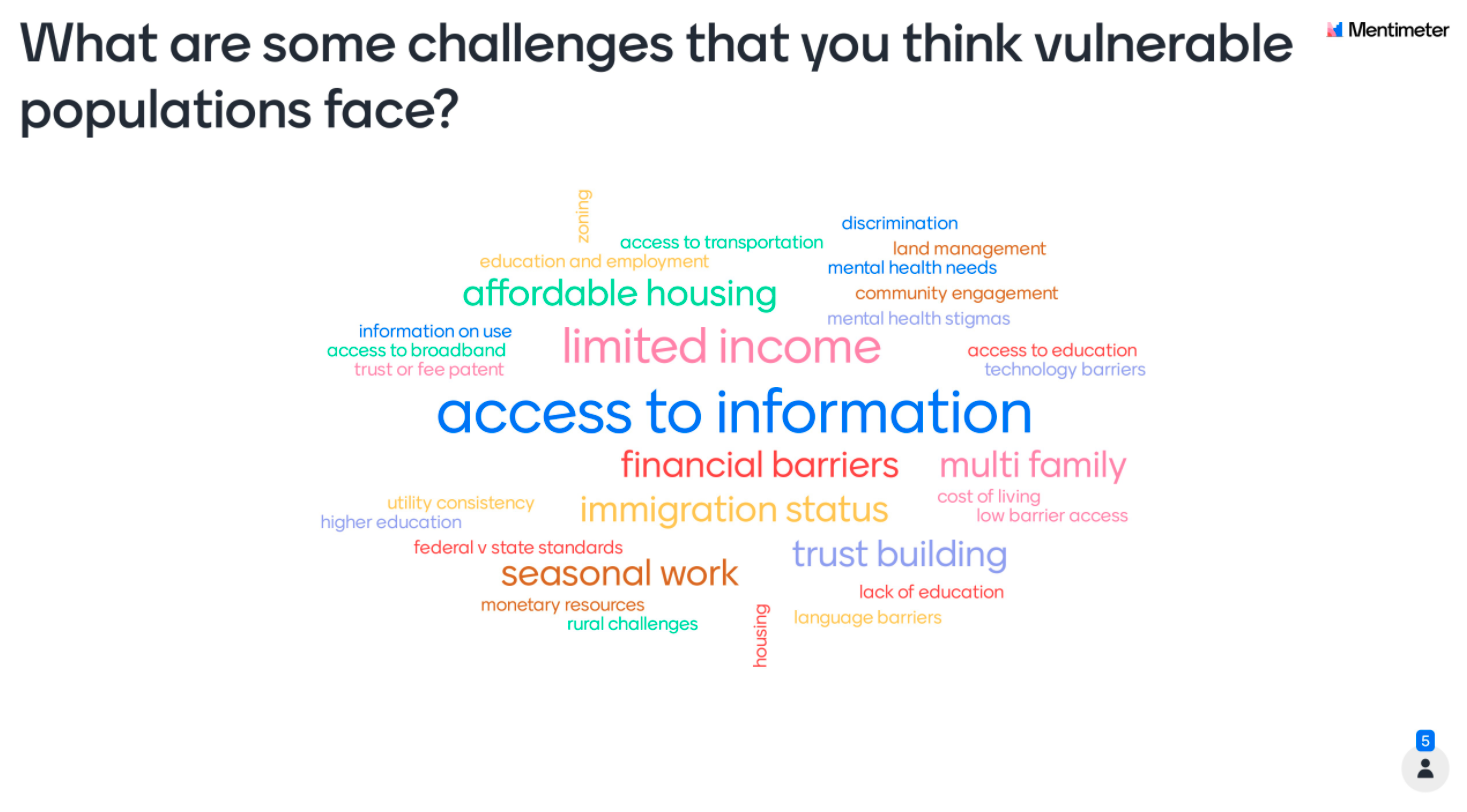
Along with these clean energy targets, utilities in Washington must ensure that its customers and communities are benefitting equitably from the transition to clean energy, demonstrated, for example, through the creation and tracking of Customer Benefit Indicators (CBIs), a transparent and open planning and implementation process that includes community input, and consideration of impacts on the most vulnerable customers.
PacifiCorp, doing business as Pacific Power in Washington, is committed to an open, transparent and accessible process to advance equity and engagement with its clean energy planning and implementation activities.
If you have questions, feedback, or would like to be added to the distribution list for the Washington Clean Energy Implementation Plan, please contact us at CEIP@PacifiCorp.com.
Developing a Clean Energy Implementation Plan
The CEIP is a four-year action plan specific to Washington customers and communities that focuses on near-term actions PacifiCorp will take to meet its short and long-term clean energy planning targets. Each CEIP includes:
- A long-term resource plan to meet 2045’s zero-greenhouse gas emitting electricity generation goals, based on the most recent Integrated Resource Plan (IRP);
- A customer benefit indicator (CBI) framework – co-developed by PacifiCorp and the Equity Advisory Group – to measure potential benefit and/or impact to communities of the resources proposed;
- A near-term action plan to support supply-side resource acquisition, growth of demand-side management programs, and other actions to ensure the equitable distribution of benefits and expanded public participation; and
- An estimate of incremental costs of compliance with CETA objectives.
2026-2029 CETA Planning Cycle
2025 Clean Energy Implementation Plan

2025 Clean Energy Implementation Plan Supplement
2022-2025 CETA Planning Cycle
2021 Clean Energy Implementation Plan
2023 CEIP Biennial Update
2026 Clean Energy Implementation Plan Compliance Report
Annual Progress Reports
Public Participation
CETA requires that equity considerations become a clear part of utility planning. As such, utilities must involve advisory groups and relevant interested parties in meaningful and inclusive public participation when developing future CEIPs, and while implementing previously acknowledged CEIPs. To document this engagement, utilities must file a Public Participation Plan (PPP) by May 1st of each odd-numbered year that details each utility’s schedule, methods, and goals for public participation and education.
Meeting spaces support an engagement ecosystem that offers an option for different types of participants, so they may engage with the company when and where it makes sense for them to do so, regarding topics that matter to them. PacifiCorp’s engagement ecosystem is structured as follows:
PacifiCorp’s most recent 2025 Clean Energy Implementation Plan Public Participation Plan provides information on the various pathways that PacifiCorp has developed, or is in the process of developing, for its public engagement spaces. The Public Participation Plan utilizes feedback captured through the company’s various public engagement channels.
Prior Public Participation Plans
Washington Feedback Tracker
In the development of each CEIP, PacifiCorp solicits input and engagement on its clean energy planning and implementation activities. A record of all feedback received in the development of each CEIP is included below and is included in the respective CEIP filing.
Washington CEIP Feedback Tracker for 2025 Planning Cycle
Washington CEIP Feedback Tracker for 2021 Planning Cycle
Customer Benefit Indicators
Washington’s transition to clean electricity requires broad system changes that affect utilities and customers, creating both costs and benefits. To help ensure these are shared equitably, as required by CETA, PacifiCorp co-developed a CBI framework with community partners, including the EAG, that:
- Identifies named communities: While many Clean Energy Implementation Plan (CEIP) programs benefit all customers, the framework adds considerations to ensure customers in Highly Impacted Communities (HICs) and Vulnerable Populations (VPs) - collectively named communities - are prioritized in receiving benefits and reduction of burden.
- Establishes Customer Benefit Indicators (CBIs): CBIs help evaluate PacifiCorp’s programs and investments, with a focus on advancing equity for named communities. The CBIs in the CEIP guide and measure progress toward outcomes such as reduction in energy burden, improvements in environmental and health benefits, and stronger grid reliability.
- Defines metrics to track progress: Companion metrics capture outcomes related to equitable benefits, customer well-being, and system performance. PacifiCorp also set baselines for each metric to support transparent, data-driven tracking of progress over time. All are presented in the company’s CEIP CBIs Report Card.
Public Participation & Engagement
Pacific Power has sought to incorporate feedback from its customers as well as members of the public in Washington. In 2021, Pacific Power assembled an Equity Advisory Group to help inform and advise the company on issues most important to the communities we serve in Washington. The Washington Equity Advisory Group helped establish Customer Benefit Indicators, the company's specific actions, its interim and specific targets and other aspects of its Clean Energy Implementation Plan. Pacific Power continues to engage with its Equity Advisory Group and members of the public.
Pacific Power's Washington Equity Advisory Group Member List (2021-2025)
Below is the proposed 2026 Washington Equity Advisory Group meeting schedule, subject to change:
1/8/2026 |
1:00-4:00 p.m. (Online); January EAG Meeting (slides and notes) |
2/12/2026 |
1:00-4:00 p.m. (Online); February EAG Meeting (slides and notes) |
3/12/2026 |
1:00-4:00 p.m. (Online); March EAG Meeting (slides and notes) |
3/23/2026 |
1:00-4:00 p.m. (Online); March DSM Advisory Group Meeting (slides) |
4/9/2026 |
1:00-4:00 p.m. (Online); April EAG Meeting (slides and notes) |
5/7/2026 |
1:00-4:00 p.m. (Online); May DSM Advisory Group Meeting (slides) |
6/11/2026 |
1:00-4:00 p.m. (Online); June EAG Meeting (slides and notes) |
7/9/2026 |
1:00-4:00 p.m. (Online); July EAG Meeting (slides and notes) |
9/10/2026 |
1:00-4:00 p.m. (Online); September EAG Meeting (slides and notes) |
9/21/2026 |
1:00-4:00 p.m. (Online); September DSM Advisory Group Meeting |
10/8/2026 |
1:00-4:00 p.m. (Online); October EAG Meeting (slides) |
12/10/2026 |
1:00-4:00 p.m. (Online); December EAG Meeting joint with DSM Advisory Group |